A Late-Summer Table for a Bowl of Plums
Plan a late-summer table around plums with an easy bake, a savory first course, and simple ways to use ripe fruit before it softens too far.
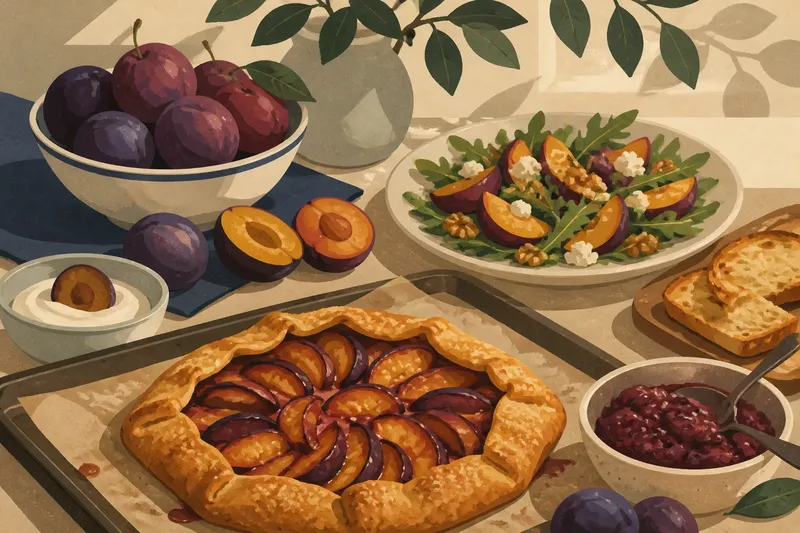
A bowl of plums can look generous at breakfast and suddenly feel like a deadline by late afternoon. For a late-summer table, give the fruit more than one small job: serve some fresh, turn a few into a savory course, and bake the rest into an unfussy dessert.
The aim is not to make every dish taste like plum. A little contrast—salty cheese, crisp greens, warm pastry—lets the fruit feel at home across the meal without asking you to spend the day at the stove. If one part goes off course, there are simple ways to adjust the plan.
When the plums ripen at different speeds
A mixed bowl is common: one plum yields gently near the stem, while another is still firm and tart. Sorting by feel is more useful than treating the fruit as a single batch. Set the softest plums aside for tonight, and leave firmer ones to ripen at room temperature, checking them as you prepare the meal.
Use ripe fruit in a salad or dessert where softness is welcome. Firm plums are easier to slice neatly for a platter, and their sharper flavor can balance rich ingredients. Avoid piling delicate fruit beneath heavier items in the refrigerator; a shallow dish helps keep it from bruising.
Imagine you have six plums: two very soft, two yielding, and two firm. You could spoon the soft pair over yogurt for a small opening bite, use the yielding fruit in a bake, and set the firm pair aside for tomorrow’s lunch. The observable result is a meal that uses the most perishable fruit first, while the firmer ones keep their shape for another purpose.
When a savory course needs more than sweetness
Plums can make a welcome first course, but a plate of fruit alone may feel more like a snack. Pair wedges with peppery arugula, toasted walnuts, and a salty cheese such as feta or a firm goat cheese. A simple dressing of olive oil, lemon juice, salt, and black pepper brings the parts together without masking the fruit.
If the plums are very sweet, add extra lemon or use a sharper cheese. If they are tart, taste the dressing before adding all of the lemon, and let a little honey soften the edge only if the whole plate needs it. Keep the dressing separate until serving so the greens stay lively.
For a more substantial table, put out toasted bread and let guests add the salad on top. It turns a light starter into something easy to share, and it gives the fruit a savory partner without requiring another cooked dish.
When a simple plum bake turns watery
Juicy fruit can release liquid as it bakes, leaving pastry soft or the center of a cake damp. The usual culprit is not a lack of effort; it is a lot of moisture in one place. Choose a bake that leaves the fruit exposed, such as a rustic galette, rather than enclosing a thick layer beneath a pastry lid.
For a straightforward galette, place rolled pastry on a parchment-lined sheet and arrange sliced plums in the center, leaving a broad border. Dust the fruit lightly with sugar and a little flour or finely ground almonds, fold the pastry edge inward, then bake until the crust is deeply golden and the fruit is bubbling. Follow the pastry recipe’s temperature and timing, since doughs vary.
Do not crowd the slices into a tall mound. A single, slightly overlapping layer gives steam a way to escape, while a rimmed baking sheet catches drips. Let the galette settle before cutting; the filling will be easier to serve once it is no longer piping hot.
When dessert tastes flat or too sharp
Plums vary from honeyed to mouth-puckering, and one spoonful of sugar cannot fix every imbalance. Taste a raw slice before baking. If it is mild and sweet, add a little lemon zest or a pinch of salt to sharpen the flavor; if it is very tart, use a touch more sugar in the filling and serve the finished galette with softly whipped cream.
Keep the accompaniment plain. Vanilla ice cream, lightly sweetened cream, or thick yogurt can calm tart fruit without competing with it. A scatter of toasted almonds adds crunch, but it is optional; the dessert should still feel complete without a special trip to the store.
How can the meal stay relaxed?
Can the plum galette be made ahead?
You can prepare the pastry and wash the fruit earlier, then assemble and bake closer to dessert. If the galette is already baked, serve it at room temperature rather than trying to make the crust freshly crisp again.
What should I serve before the bake?
Choose one uncomplicated savory plate: arugula with plum, walnuts, and salty cheese, or toasted bread with that salad tucked on top. A simple first course leaves room for dessert and keeps the meal from becoming a parade of plum dishes.
What can I do with leftover ripe plums?
Slice them into breakfast yogurt, add them to a green salad, or simmer them gently with a splash of water until spoonable. Chill the cooked fruit in a covered container and use it soon; for longer storage, follow a preserving recipe suited to the method rather than guessing at canning instructions.
Should I refrigerate plums before serving?
Ripe plums can be chilled if you prefer them cool, but bring them out while you set the table so their aroma is easier to notice. Keep cut fruit covered and refrigerated, and discard any that develops mold or an unpleasant smell.
When the fruit is bruised or more plentiful than dinner needs
A bruise does not always mean the whole plum must be thrown away. If the fruit is otherwise sound, trim away the damaged area and use the remaining flesh promptly in a cooked topping or sauce. Fruit with mold, leaking decay, or an off smell belongs in the compost or trash, not on the table.
For a quick stovetop topping, cut sound plums into chunks and warm them in a small saucepan with a splash of water. Stir as they soften, then taste and adjust with lemon or sugar. Spoon the result over oatmeal, pancakes, or yogurt; it can also accompany roast chicken or a wedge of mild cheese.
If you have more fruit than you can use soon, decide whether you want it ready for quick meals or stored for later. Chopped plums can be frozen on a tray before being transferred to a freezer-safe container, though their texture will soften after thawing. For shelf-stable preserves, use a tested recipe and follow its directions, including the guidance for jars and processing.
Let one bowl carry the meal without taking it over
A late-summer table around plums works best when each use suits the fruit’s condition: crisp wedges for a savory plate, ripe slices for a rustic bake, and softer pieces for breakfast or a quick sauce. Put the most fragile fruit to work first, then keep the rest for another meal rather than forcing every plum into dessert.
That is the useful promise of a late-summer table built around a bowl of plums: one easy bake anchors the evening, while a few thoughtful choices keep the fruit useful before and after it. Set out the galette with a small bowl of cream, leave the savory salad dressed at the last minute, and save a handful of firm plums where you can see them tomorrow.