The Kitchen Garden Before the Seed Catalogue
The kitchen garden served everyday household needs long before seed catalogues. Learn how its practical purpose can shape a useful garden today.
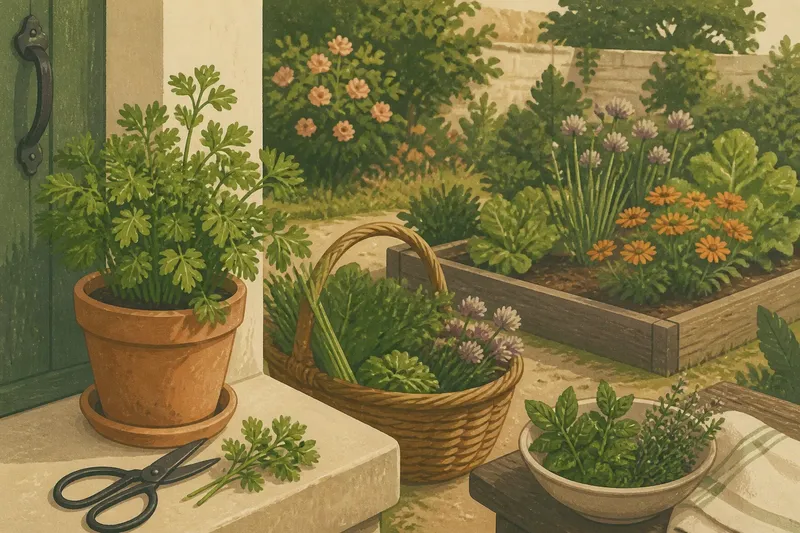
A handful of parsley is needed for dinner, but the bunch on the counter has already begun to wilt. Stepping outside to snip a fresh sprig shows why a kitchen garden took shape around everyday needs: useful plants were kept within reach of the cooking and work of the household. Long before printed seed catalogues, people chose what to grow according to local food, custom, land, and circumstance.
Household needs shaped the kitchen garden
A kitchen garden was a working space, not simply a decorative patch beside a house. Its plants might supply food, seasoning, fragrance, or materials for household tasks, and its scale depended on the land and labor available.
“Kitchen” described the garden’s connection to domestic life rather than a fixed layout. It might sit within the grounds of a large property, beside a modest dwelling, or in a plot some distance from home. A pot of mint near a doorway and a walled garden could both serve household needs.
The garden could change as those needs changed. A household might devote more space to a familiar ingredient or a crop it could store, while making room for something seasonal. There was no single arrangement that suited every place or period.
Useful plants served more than one purpose
Modern categories can make vegetables, herbs, flowers, and medicinal plants seem separate. In household gardens, their uses often overlapped. A plant might season a meal, provide fragrance, attract pollinators, or be associated with a customary remedy, depending on local practice.
Herbs suited close cultivation because cooks could gather small amounts as needed. Their fragrance also had uses beyond cooking, though household remedies varied by place and tradition and should not be treated as medical advice.
Flowers could contribute scent, decoration, or edible parts, and some helped draw pollinators. A garden could be both useful and pleasing, like a well-used kitchen knife with a handle someone enjoys holding.
Households did not have to grow everything they used. They could also buy, exchange, gather, or receive food and plants. The kitchen garden belonged to a wider network of provision and knowledge rather than functioning as a sealed system.
Location connected plants with daily work
A plant near the door could be gathered while a meal cooked; a distant plot required a separate trip. Water, shelter, soil, and the division of household labor all influenced which plants made sense close to the kitchen.
Walls or hedges could provide shelter, mark boundaries, or keep animals away. Beds and paths made tending easier, while containers offered options where ground was limited. These were practical choices, not parts of a universal design.
Imagine a household that cooks with parsley often but has only a narrow strip near the back door. It puts parsley in a pot there and grows a less-used plant in a farther bed. The likely result is that the frequently gathered herb is easier to reach, while the limited near-door space remains available for other daily tasks.
Preserving linked the harvest to the seasons
Fresh picking was only one part of the relationship between a garden and a household. Drying, salting, pickling, fermenting, and other ways of keeping food could extend a harvest beyond the season. What people knew how to preserve and enjoyed eating influenced which crops they valued.
Preserving also called for time, equipment, storage space, and familiar skills. A crop that could be dried or stored might serve a different purpose from one best eaten soon after picking. The garden’s usefulness depended on how people could use what it produced.
Knowledge about local soil, weather, gathering, and storage traveled through families and communities. It changed as plants, tastes, and circumstances changed, rather than following one unchanging formula.
Kitchen gardens followed different local traditions
There was no original kitchen garden with a standard layout and an agreed list of crops. Gardens differed by region and period, reflecting climate, land access, wealth, labor, and cuisine. A courtyard, open acreage, and shared plot each presented different choices.
It is easy to romanticize the past as a time when every household had a self-sufficient garden. Access to land and the labor of tending it were uneven, and a garden might supplement food from markets, neighbors, trade, or seasonal gathering.
Seed catalogues later offered gardeners a way to browse named seeds and consider choices without relying only on what was available nearby. Their arrival changed how seeds could be encountered, but householders had long selected plants in response to meals, local knowledge, and growing conditions.
A kitchen garden can still start with household use
For a gardener now, this history is more useful as a way to think than as a blueprint. Start with the plants that suit your meals, available space, and care routine. Then make a small decision for each plant:
- Check what you cook with often. If an herb or green appears regularly in meals, give it an accessible place; if it rarely gets used, grow less of it or leave it out.
- Check how easy the spot is to reach. If watering and harvesting fit your daily route, keep the plant there; if you often overlook it, move it nearer a doorway or another regular stop.
- Check the growing space you actually have. If ground is limited, try a suitable container or window box; if neither fits the site, choose a different plant or use a shared plot.
- Check whether you preserve the crop. If you dry, freeze, or otherwise keep it and have room to store it, consider growing enough for that use; if not, favor an amount you can eat fresh.
- Check whether the plant fits the care you can give. If its needs fit your routine, keep it in the plan; if it is repeatedly neglected, choose a lower-effort plant suited to the site.
- Check whether the plant earns its space through use. If you enjoy cooking with it or value another practical use, keep it; if it goes unused, replace it with something more relevant to your household.
Say you cook with thyme most weeks but rarely use leafy greens, and you have one reachable container and a small bed farther from the door. Put thyme in the container, reserve the bed for a smaller amount of greens, and observe whether both fit your meals and care routine. If the greens go unused, the result points toward giving their space to a plant you reach for more often; if you use them regularly, keeping the arrangement makes sense.
What do people ask about kitchen garden history?
Did every kitchen garden sit beside the house?
No. Close access was convenient, but gardens could be farther away when land, boundaries, or local arrangements called for it. The defining idea was service to household needs, not a precise distance from the kitchen.
Were kitchen gardens only for vegetables?
No. They could include herbs, fruit, flowers, and plants valued for fragrance or other household uses. The boundary between food and other useful plants was not always sharp.
Did kitchen gardens make households self-sufficient?
Not necessarily. A garden could supply valued fresh ingredients or stored produce while a household also relied on markets, exchange, gathering, or other sources. Its contribution varied with local circumstances.
What did seed catalogues change?
They provided a way to browse named seed offerings and consider choices from a distance. They changed how gardeners encountered seeds, while the practice of choosing plants for household use continued.
The kitchen garden before the seed catalogue was a connection between plants and daily life, not a fixed design. The phrase “kitchen garden” still makes sense when the planting reflects the food you cook, the space you have, and the care you can sustain. A small pot of an often-used herb may serve that purpose better than a larger plan that is hard to maintain.