Jam, Compote, or Freezer Fruit for Winter Tarts?
Choose jam, compote, or freezer fruit for winter tarts by matching each preserve’s texture and preparation to the filling you want to bake.
You open the freezer on a cold afternoon and spot a container of summer cherries beside a jar of apricot jam. For winter tarts, jam, compote, and frozen fruit can all bring fruit to the table, but they make different fillings. The best choice depends on whether you want a smooth layer, soft pieces, or fruit that still holds its shape.
Jam gives a tart a smooth, concentrated layer
Jam is usually the easiest option when you want an even, ready-to-spread filling. Its cooked fruit and sugar form a cohesive mixture, so a thin layer can sit neatly inside a pastry shell without much arranging.
Choose a flavor that works with the tart’s other ingredients. Raspberry or sour cherry can cut through a buttery crust, while apricot often suits almond, pear, or stone-fruit flavors. A strongly flavored jam can dominate delicate pastry, so taste it before deciding how generously to spread it.
Jam also suits small tarts and pastries where neat portions matter. It is convenient for a quick bake, though its softness and sweetness mean it will not give you the distinct, juicy pieces that fresh fruit would.
Compote keeps soft fruit pieces in the filling
Compote is fruit cooked until tender, often with a little sugar and perhaps lemon, spices, or another flavoring. It generally has less of jam’s set, spreadable character, leaving some fruit pieces visible and making a softer, more spoonable filling.
Use it when you want the fruit itself to be noticeable but do not need it to retain a crisp, fresh shape. Apple compote with cinnamon can make a homey tart; plum compote can bring a tart sweetness that pairs well with a plain pastry shell.
Because compote can carry more loose liquid, consider how it will behave on pastry. A thick layer may soften the base as the tart sits. You can spoon off excess syrup before filling, or pair a modest amount with a crumb barrier such as ground almonds or fine cookie crumbs.
Frozen fruit preserves a more distinct shape
Freezer fruit is the choice for a filling built around recognizable berries, cherries, or sliced stone fruit. Freezing keeps the fruit available with little preparation, though thawing can release juice and soften its texture.
For a tart, decide whether the fruit will be baked from frozen or thawed first according to the recipe and the fruit’s size. Either way, pay attention to the liquid. Thawing in a sieve over a bowl lets you separate fruit from juice; you can then use some of that juice in a glaze or cook it down for a more concentrated topping.
Frozen fruit suits rustic tarts and fillings where a little variation in shape is welcome. It can be less convenient for a carefully arranged top, since berries may soften and shed juice during baking. Smaller fruit often needs less arranging than large pieces, but the exact result depends on the fruit and the recipe.
Match the preserve to the tart you want
Think of the filling like choosing between a smooth spread, a soft spoonful, and whole pieces of fruit. Each has a place; the pastry and the occasion help decide which one belongs there.
- For a thin, tidy layer: Choose jam for a small tart, a filled pastry, or a flavor accent beneath another topping.
- For a soft, home-style center: Choose compote when you want tender fruit pieces and a spoonable filling.
- For visible fruit: Choose freezer fruit when berries or slices should remain the main feature.
- For a quick bake: Jam is ready to use; compote may need draining, while frozen fruit may need thawing or a plan for its juices.
- For a crisp pastry base: Favor a restrained amount of filling and manage loose liquid, especially with compote or thawed fruit.
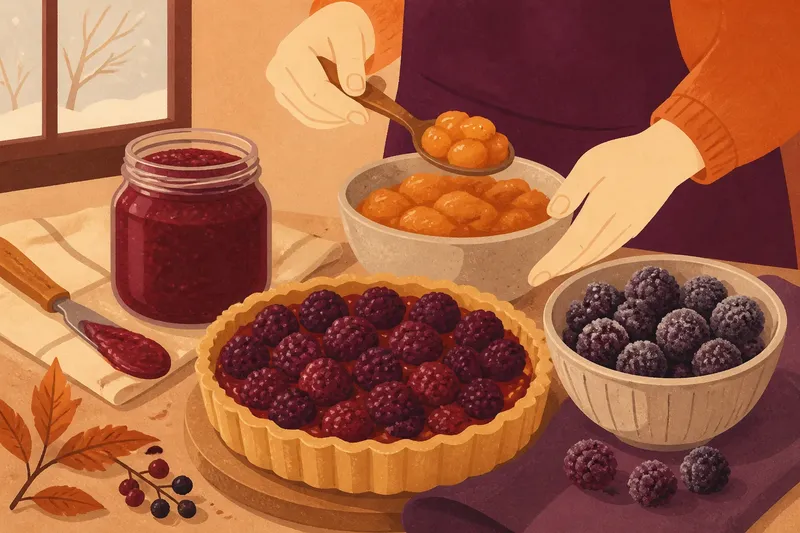
Say you have a pastry shell, frozen blackberries, and a jar of apple compote. If the tart should show individual berries, thaw the blackberries in a sieve, keep the fruit, and reserve the juice for another use; the expected result is a more distinct fruit topping with less loose liquid on the pastry. If you want a softer, apple-led center instead, use the compote in a modest layer and add a few berries on top for contrast.
How should you choose and prepare each filling?
Can jam be used as the only tart filling?
Yes, if you want a smooth, sweet center and the recipe is suited to a jam-filled tart. Spread it in a moderate layer so the flavor and texture do not overwhelm the pastry.
Should compote be drained before baking?
Check its consistency in the bowl: if liquid pools around the fruit, spoon off some before filling the shell. A thicker compote can usually be used as it is, though a thin layer still helps protect the pastry.
Can frozen fruit go straight into a tart?
Some recipes allow it, while others call for thawing first. Follow the recipe’s direction and account for the juice the fruit releases, rather than assuming frozen and fresh fruit behave alike.
Which option works best for a neat fruit pattern?
Jam makes the smoothest base, while firm, well-drained fruit gives the clearest arrangement. Compote is better suited to a relaxed surface than to carefully spaced pieces.
Store and handle each option with care
Keep jam and compote in clean, suitable containers and follow the recipe or product’s storage guidance after opening. Freeze fruit in portions that make sense for your usual tart size, so you can take out what you need without repeatedly thawing and refreezing a large supply.
For preserving safety and storage, follow the recipe, product label, and relevant local guidance; fruit acidity and preparation methods can affect what is appropriate. If you are choosing among jam, compote, and freezer fruit specifically for winter tarts, start with the texture you want on the plate, then account for how much extra juice the pastry can handle.